Blade Runner 2099: Beyond AI and Into a Hot, Sticky Future
Hunter Schafer and the creative team behind Prime Video's ambitious new series reveal why the latest installment looks past artificial intelligence to explore deeper human struggles.
Key Takeaways
- Blade Runner 2099 moves past standard artificial intelligence narratives to explore broader themes of climate collapse and social stratification.
- Starring Hunter Schafer, the Prime Video series delivers a visually striking and fresh take on the iconic cinematic universe.
- Critics praise the show's suffocating, immersive atmosphere, describing the setting as tangibly hot, humid, and visually breathtaking.
- The series signals a major evolution in how television handles cyberpunk storytelling by focusing heavily on human vulnerability and corporate dominance.
When Ridley Scott first brought Philip K. Dick's dystopian vision to the silver screen in 1982, the cinematic landscape changed forever, establishing a gritty blueprint for modern science fiction. Decades later, the franchise is expanding onto television with Prime Video's highly anticipated Blade Runner 2099, a project that promises to transport audiences deeper into a rain-slicked, neon-drenched future. Yet, despite the inherent technological trappings of the universe, the series' creators and star Hunter Schafer have been quick to emphasize that artificial intelligence is merely a backdrop for a much more expansive and profoundly human narrative exploring systemic decay, survival, and societal transformation.
Early critical reception has lauded the series for maintaining the iconic visual splendor of its predecessors while carving out a distinct, terrifyingly beautiful identity of its own. Reviewers from major publications highlight Schafer's standout performance and note that the production design captures a uniquely oppressive atmosphere that sets it apart from previous film installments. As audiences prepare to dive back into this legendary sci-fi tapestry, the conversation surrounding the show has shifted away from predictable tech tropes and toward a more nuanced examination of what it means to live in a world fundamentally altered by climate neglect and unchecked corporate power.
Expanding the Cinematic Universe of Blade Runner
Adapting a beloved cinematic masterpiece into an ongoing television format is no small feat, particularly when the original films carry such legendary cultural weight. The creative team behind Blade Runner 2099 faced the monumental challenge of honoring the distinct aesthetic established by Ridley Scott and later expanded by Denis Villeneuve while introducing entirely new narrative territory. Instead of relying purely on nostalgic callbacks, the series builds out a sprawling timeline that stretches decades past the events of the previous movies, allowing for fresh conflicts and a deeper exploration of a world that has continued to rot and evolve underneath the crushing weight of industrialization and urban sprawl.
Transitioning the franchise to the small screen also opened up unprecedented opportunities for pacing, character development, and world-building that a two-hour film simply cannot accommodate. Television allows writers to linger in the dark corners of this future society, examining the daily lives of citizens who exist far below the towering corporate headquarters and gleaming off-world transit hubs. This expanded format gives the narrative room to breathe, inviting viewers to absorb the texture of the environment, from the decaying infrastructure to the subtle cultural shifts that occur over generations when humanity feels trapped in a perpetual cycle of environmental and economic decline.
Furthermore, this television adaptation proves that the thematic DNA of the franchise remains remarkably flexible and resilient. By shifting the timeline further into the twenty-first century, the creators ensure that the story reflects contemporary anxieties rather than merely recycling retro-futuristic concepts from the nineteen-eighties. The resulting narrative bridges the gap between classic cyberpunk philosophy and modern dystopian realities, proving that the core questions raised by Philip K. Dick's original novel are more urgent today than they were when the franchise first made its theatrical debut decades ago.
Hunter Schafer and the Human Heart of 2099
At the center of this expansive new narrative is Hunter Schafer, whose casting has generated immense excitement among fans and critics alike. Known for her ability to infuse complex characters with raw vulnerability and distinct emotional depth, Schafer brings a magnetic presence to the screen that anchors the series amid its dizzying visual spectacle. Rather than playing a standard sci-fi archetype, her character navigates the treacherous moral gray areas of a fractured society, serving as an emotional proxy for the audience as they witness the daily degradations and quiet tragedies of life in a compromised world.
Interviews with the star and series creators reveal that the production placed a heavy emphasis on grounding the performances in authentic human emotion rather than getting bogged down in technological exposition. Schafer's approach to the role involves exploring themes of identity, bodily autonomy, and survival within a system that treats ordinary people as disposable commodities. This focus ensures that even when the plot dips into high-concept science fiction territory, the audience remains anchored by the genuine stakes and emotional resonance of the characters struggling to find meaning against overwhelming odds.
The dynamic between Schafer's character and the broader ensemble cast further elevates the dramatic tension of the series, creating a rich tapestry of conflicting motives and loyalties. As secrets are uncovered and corporate agendas come to light, her performance helps drive home the central thesis that human resilience cannot be easily manufactured or controlled. It is this powerful anchor of character-driven storytelling that prevents the high-budget production from feeling cold or purely clinical, transforming a dystopian thriller into a deeply compelling human drama.
Climate Collapse and the 'Hot and Sticky' Aesthetic

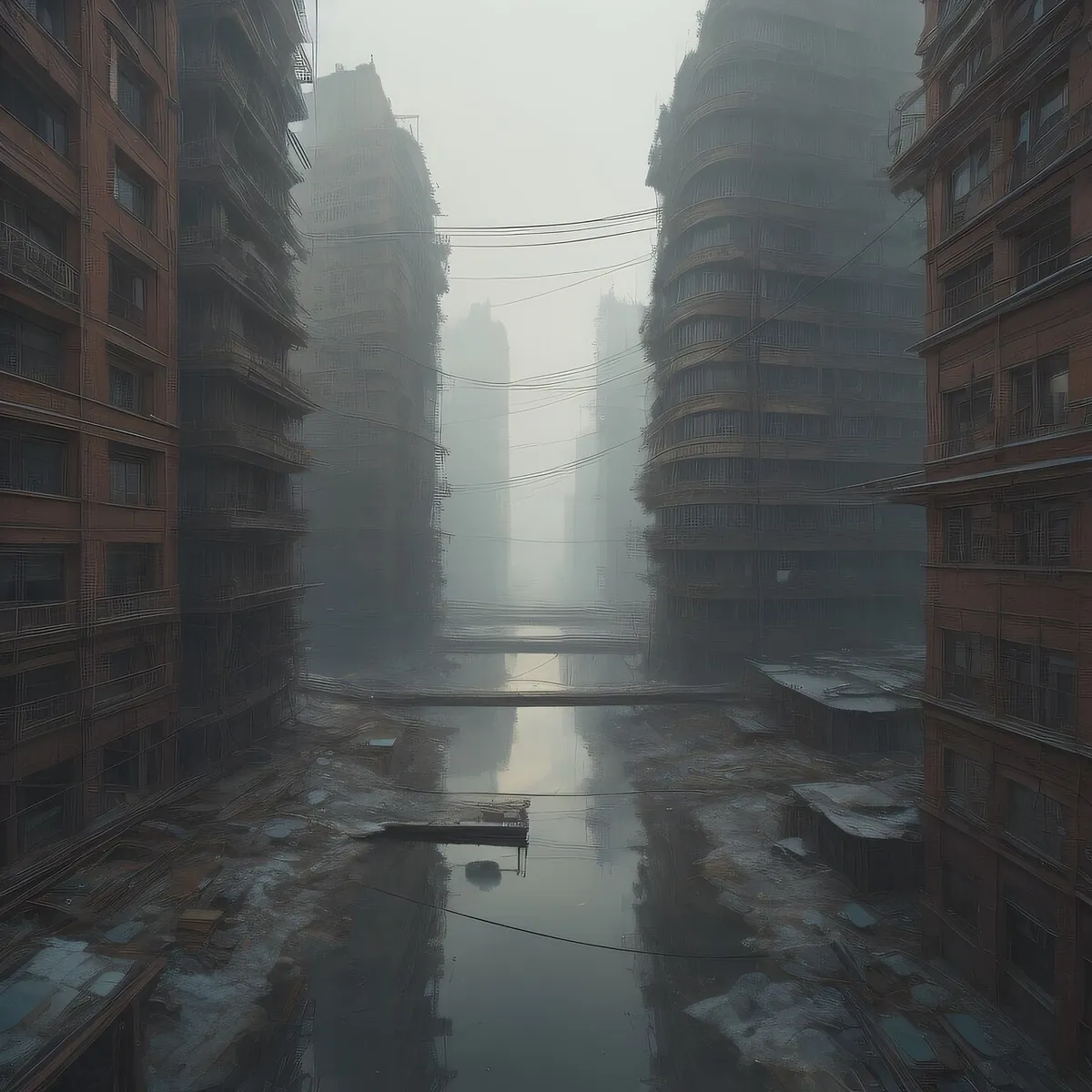
While earlier iterations of the franchise were famously defined by relentless rain, perpetual gloom, and chilling urban cold, Blade Runner 2099 shifts the environmental dial in a striking new direction. Critics reviewing the series have noted that the future depicted on Prime Video feels palpably different, characterized by a climate that is suffocatingly hot, humid, and oppressive. This sweaty, atmospheric world-building reflects our own growing anxieties regarding global climate change, moving beyond mere aesthetic choices to comment directly on the physical consequences of ecological devastation and planetary neglect.
The visual language of the show reinforces this sensory shift, utilizing lighting, color grading, and meticulous set design to evoke a sense of unbearable heat and heavy, stagnant air. Reviewers have praised how every scene is packed with a terrifying visual beauty that makes the environment feel like a living, breathing antagonist in its own right. The sheer attention to detail in portraying this sweltering urban hellscape ensures that viewers can almost feel the humidity radiating through their screens, immersing them completely in a world where nature has been entirely subjugated by concrete and smog.
This deliberate pivot in environmental design also serves to heighten the psychological tension experienced by the characters throughout their journeys. When the air itself feels heavy and oppressive, every physical movement carries extra weight, amplifying feelings of claustrophobia and desperation. By anchoring the science fiction elements in a tangible, uncomfortably warm reality, the creators manage to make the futuristic setting feel immediate, urgent, and alarmingly close to home for modern audiences navigating real-world ecological shifts.
Beyond Artificial Intelligence: Exploring Societal Decay
A common pitfall for modern science fiction projects is leaning too heavily on artificial intelligence as the sole thematic vehicle for exploring what makes us human. However, both the creators and star Hunter Schafer have been vocal about the fact that Blade Runner 2099 uses AI as a peripheral lens rather than the primary focus of its narrative. While synthetic beings and manufactured consciousness remain part of the broader lore, the series turns its primary attention toward systemic corruption, severe economic disparity, and the erosion of basic human rights under corporate governance.
In this bleak future, the true monsters are rarely rogue machines, but rather the massive, untouchable conglomerates that commodify every aspect of daily existence for profit. The series investigates how ordinary citizens cope with institutional indifference, mass surveillance, and the complete commodification of public spaces. By shifting the thematic burden away from philosophical debates about robot sentience and toward concrete social issues, the show manages to offer a much more piercing critique of contemporary capitalism and societal structures.
This broader thematic scope allows the narrative to touch on universal struggles that resonate deeply with viewers living through periods of rapid technological and economic transformation. The challenges faced by the characters—ranging from housing crises to corporate exploitation—mirror our own anxieties about the future of labor and governance. Consequently, Blade Runner 2099 transcends standard genre entertainment, functioning as a cautionary mirror that prompts audiences to reflect critically on the direction our own society is heading.
For more deep dives into the latest streaming hits and pop culture trends, explore our comprehensive tech and lifestyle coverage on BMEStalk: Canary Islands Migration Crisis Peaks With Record Arrivals.
Critical Reception and Visual Mastery
As the first reviews for Blade Runner 2099 make their way across the media landscape, critics have been quick to praise the project's ambition and execution. Outlets ranging from traditional trade publications to specialized review aggregators have lauded the series for maintaining the high artistic standards set by its cinematic predecessors while establishing a unique voice. Particular praise has been directed at the cinematography and production design, which manage to balance grand, sweeping vistas of urban decay with intimate, sharply focused character moments that keep the audience emotionally engaged.
Reviewers have been especially vocal about the show's ability to replicate the iconic neo-noir atmosphere without feeling like a cheap imitation of past triumphs. The careful blending of practical effects, advanced digital artistry, and meticulous set construction results in a visual feast where every single frame feels carefully composed and rich with narrative detail. This commitment to visual excellence ensures that the series stands out in a crowded streaming market, offering an immersive cinematic experience that rewards attentive viewing and deep appreciation for atmospheric world-building.
Furthermore, critics have highlighted the pacing and tonal consistency across the episodes, noting that the narrative maintains its grip on the viewer from the opening moments of the premiere. The positive critical consensus suggests that Prime Video has successfully captured lightning in a bottle, delivering a prestige science fiction drama that satisfies longtime devotees of the franchise while remaining entirely accessible to newcomers looking for high-caliber storytelling and stellar performances.
The Evolution of Cyberpunk Storytelling in Television
The launch of Blade Runner 2099 arrives at a fascinating cultural moment for the cyberpunk genre, which has increasingly found a fertile home on television screens. Over the past several years, viewers have shown a voracious appetite for complex, long-form dystopian narratives that grapple with the intersection of advanced technology, social stratification, and human identity. This series represents a significant milestone in that evolution, proving that mature science fiction can command massive budgets and prestige talent without sacrificing its intellectual rigor or thematic depth.
By moving away from simple action tropes and focusing instead on nuanced character studies and environmental commentary, the show helps redefine what contemporary audiences can expect from high-end genre television. It bridges the gap between popcorn entertainment and provocative social commentary, demonstrating that futuristic settings can serve as powerful vehicles for exploring urgent, real-world concerns. This maturation of the genre reflects a broader shift in lifestyle and entertainment trends, where audiences increasingly demand stories that mirror their complex, fast-changing reality.
Ultimately, Blade Runner 2099 sets a new benchmark for how intellectual properties can be expanded across different mediums without losing their foundational soul. By trusting creators to take bold risks with aesthetics, themes, and casting choices, the production proves that iconic universes can continue to grow and surprise us decades after their initial inception. As the series establishes its footprint on Prime Video, it paves the way for a new generation of intelligent, visually stunning science fiction storytelling that will undoubtedly influence the television landscape for years to come.