Trump Owned Nvidia Stock While Pressing for Jensen Huang's Return
A recent financial disclosure reveals striking entanglements as the White House aggressively lobbied for the return of Nvidia's chief executive during a period of monumental tech breakthroughs.
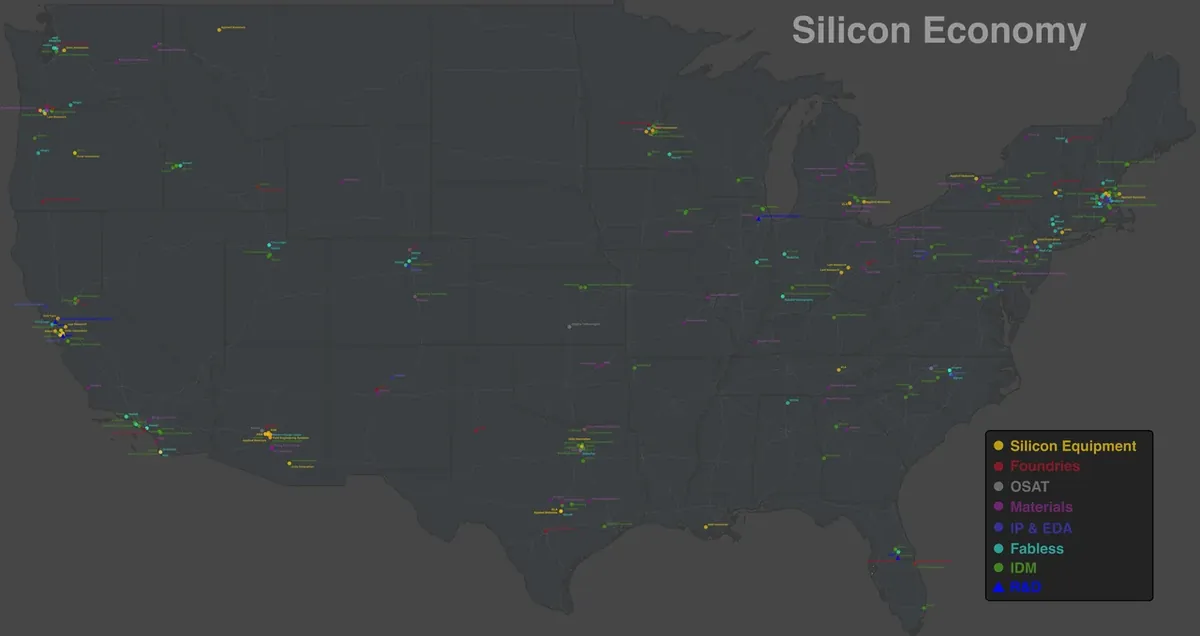
Key Takeaways
- Donald Trump held significant financial stakes in Nvidia while administration officials pushed for Jensen Huang's reinstatement.
- The White House engaged in high-stakes lobbying to stabilize leadership at the world's most valuable artificial intelligence hardware company.
- Jensen Huang faced intense personal strain, addressing employees directly and confirming he entered therapy amid the corporate upheaval.
- The convergence of personal stock ownership and executive branch intervention has ignited fresh debates regarding government ethics and conflicts of interest.
The modern intersection of high-stakes American politics and global technological dominance has rarely produced a narrative as complex as the recent convergence involving artificial intelligence titan Nvidia. Recent financial disclosures have brought to light a striking revelation: Donald Trump held millions of dollars in Nvidia stock precisely while key political figures and administration insiders were intensely lobbying the semiconductor giant to reinstate its visionary chief executive, Jensen Huang. This extraordinary entanglement of private financial gain and executive branch intervention underscores the unprecedented influence that trillion-dollar technology firms now hold over national economic strategy and geopolitical stability.
As artificial intelligence continues to reshape everything from global defense capabilities to fundamental mathematical research, the stability of key infrastructure providers like Nvidia has become a matter of national security. Yet, the revelation that top-level political actors were leaning heavily on corporate boardrooms while simultaneously maintaining personal financial stakes in the outcome has ignited sharp criticisms from ethics watchdogs and political opponents alike. Understanding how this high-pressure drama unfolded requires looking closely at the intersection of boardroom volatility, presidential financial portfolios, and the relentless, breakneck evolution of artificial intelligence technology that makes silicon chips the new oil of the twenty-first century.
The Intersection of Power, Silicon, and Financial Stakes
The contemporary global economy runs almost exclusively on advanced semiconductors, positioning companies like Nvidia at the absolute epicenter of geopolitical leverage. When significant financial holdings intersect with active governmental intervention, traditional boundaries separating public duty from private investment begin to blur dramatically. Donald Trump's substantial multi-million-dollar portfolio holdings in Nvidia placed him in a unique financial position where executive policy decisions, trade postures, and diplomatic pressures could directly influence the valuation of his personal assets. Observers note that this dual role of investor and political influencer highlights systemic vulnerabilities within modern political disclosure frameworks, raising timeless questions about accountability and potential conflicts at the highest levels of American governance.
Nvidia's unprecedented rise as the indispensable engine behind the generative artificial intelligence boom transformed its market capitalization into historic territory. Consequently, any disruption to its leadership structure or operational continuity instantly sends shockwaves through global financial markets, impacting millions of retail investors, pension funds, and institutional portfolios worldwide. When Jensen Huang faced internal pressures that threatened his leadership tenure, the gravity of the situation transcended a standard corporate dispute. It morphed rapidly into a matter of urgent national economic concern, drawing the intense focus of Washington insiders who viewed Huang's steady hand as vital for maintaining America's technological supremacy against fierce international competition.
The revelation of these financial holdings alongside aggressive political maneuvering has triggered fierce debates across legal, financial, and political spectrums. Critics argue that even the perception of a conflict of interest undermines public trust in economic policies designed to support domestic high-tech manufacturing and innovation. Supporters, conversely, contend that leaders often maintain diverse portfolios and that advocating for a critical American enterprise like Nvidia serves the broader national interest regardless of personal financial outcomes. Regardless of partisan perspectives, this episode serves as a watershed moment illustrating how deeply intertwined personal wealth, executive power, and corporate governance have become in the modern digital era.
Inside the Frantic White House Push for Jensen Huang
Behind closed doors, the White House exhibited an extraordinary level of urgency regarding the leadership stability at Nvidia. Reports from leading financial publications revealed a frantic campaign orchestrated by administration figures determined to see Jensen Huang restored to his leadership position without delay. This aggressive lobbying effort was driven by a shared fear that any prolonged leadership vacuum at the semiconductor giant could stall crucial supply chains, compromise national defense artificial intelligence initiatives, and cede critical ground to global competitors. Officials operated with a palpable sense of panic, recognizing that America's technological edge depended heavily on Huang's continued stewardship of the world's premier chip designer.
The mechanics of this political intervention involved a flurry of private phone calls, diplomatic nudges, and urgent messages directed at key board members and corporate stakeholders. Administration insiders framed their involvement not merely as corporate meddling, but as a strategic imperative to safeguard national security interests tied to artificial intelligence development. Because Nvidia hardware underpins nearly every major advanced AI model currently training across the globe, a destabilized leadership team was viewed as an unacceptable vulnerability. This extraordinary level of executive branch engagement illustrates the blurring lines between sovereign governance and corporate strategy in an age where a handful of technology companies dictate the pace of human innovation.
While administration defenders defended the outreach as proactive economic stewardship, ethics experts viewed the frantic lobbying through a vastly different lens. The simultaneous existence of substantial personal stock holdings in Nvidia by key political figures created an optics nightmare that fueled accusations of self-dealing and undue influence. When the boundaries between protecting national technological dominance and safeguarding personal investment portfolios are erased, public confidence inevitably erodes. The White House push to reinstate Huang thus became a case study in the perils of mixing personal financial exposure with the immense machinery of executive branch diplomacy and corporate rescue operations.
The Personal Toll and Corporate Culture at Nvidia
While Washington officials scrambled to secure his return, Jensen Huang was navigating a profoundly turbulent period within his own corporate kingdom. Known for his iconic leather jacket and visionary leadership style, Huang was forced to confront unprecedented internal friction that culminated in emotional apologies to his dedicated workforce. In candid exchanges reported by major journalistic outlets, Huang acknowledged the immense strain and vulnerability of leading a trillion-dollar enterprise through a period of relentless hyper-growth and internal governance challenges. He revealed to employees that he had entered therapy to cope with the immense psychological pressures accompanying his corporate responsibilities and the relentless demands of the global artificial intelligence revolution.
The human element at the heart of Nvidia's corporate culture is frequently overshadowed by staggering stock market valuations and abstract discussions about semiconductor physics. However, the emotional toll experienced by top executives underscores the crushing weight of modern corporate leadership, where a single misstep can trigger global economic instability. Huang's willingness to speak openly about seeking professional support marked a refreshing, albeit startling, departure from the stoic archetype traditionally associated with Silicon Valley titans. It humanized a figure who is often viewed as an almost mythical architect of the future, reminding observers that the architects of the artificial intelligence boom are grappling with very human limits.
The corporate culture at Nvidia has long prided itself on intense collaboration, flat organizational structures, and a relentless drive toward technological perfection. Yet, the recent leadership crisis exposed underlying fractures within the company as it scaled into an economic behemoth of historic proportions. Navigating the transition from a specialized gaming hardware manufacturer to the absolute bedrock of global artificial intelligence required structural adaptations that tested even Huang's legendary management acumen. As the company stabilizes following his triumphant reinstatement, rebuilding internal cohesion and repairing employee trust remain paramount challenges for a leadership team operating under intense public scrutiny.
Ethics, Transparency, and the Growing Conflict of Interest
The intersection of government policy, personal investment, and corporate lobbying brings fundamental questions of ethics and transparency back to the forefront of national discourse. Ethics watchdogs and legal scholars have repeatedly pointed out that holding millions of dollars in shares of a specific company while actively intervening in its governance creates an untenable conflict of interest. Even if policy decisions are made with the sincere belief that they serve the national interest, the financial incentive of the official casts a long shadow over their impartiality. This dynamic undermines democratic accountability and invites rigorous scrutiny from watchdog organizations demanding stricter financial disclosure and divestment protocols for public figures.
Current regulatory frameworks governing political figures and financial holdings often struggle to keep pace with the complex, hyper-fast realities of the modern technology economy. While traditional blind trusts or asset disclosures were designed to prevent overt corruption, they frequently fail to address nuanced forms of influence where political pressure is applied to sectors in which officials hold direct stakes. As technology companies achieve unprecedented economic dominance, the potential financial payoff for political intervention grows exponentially. Consequently, calls for comprehensive legislative reform have intensified, with advocates pushing to bar high-ranking officials from trading or holding individual stocks in vital sectors like semiconductors and artificial intelligence.
Restoring public faith in the integrity of economic policymaking will require significantly enhanced transparency and stringent enforcement of ethical boundaries. When everyday citizens observe political leaders reaping millions from corporate fortunes while utilizing the levers of state power to rescue those same enterprises, cynicism deepens. Addressing this systemic challenge demands bipartisan commitment to closing loopholes that permit obvious conflicts of interest under the guise of national security or economic patriotism. Until such reforms are enacted, the specter of personal financial gain influencing critical public decisions will continue to shadow major technological developments in the United States.
Explore our latest tech analysis to discover how artificial intelligence advancements are transforming modern consumer markets: Leaked Data Exposes Hidden Scale of Russian War Casualties.
Breakthroughs in AI Amid Corporate Turmoil
Amid the frantic political lobbying, financial disclosures, and executive soul-searching, Nvidia's underlying technology has continued to achieve astonishing feats that redefine the boundaries of human knowledge. Recent scientific reports highlighted groundbreaking developments where artificial intelligence systems accelerated by Nvidia hardware successfully solved complex mathematical anomalies, including historic challenges related to the Riemann hypothesis. These computational milestones demonstrate that the silicon chips powering modern data centers are no longer just tools for generating digital images or conversational chatbots; they are becoming foundational instruments for unlocking centuries-old scientific and mathematical mysteries.
The symbiotic relationship between algorithmic innovation and semiconductor hardware capacity remains the driving force behind the ongoing artificial intelligence revolution. As researchers push the limits of neural networks, the demand for high-performance GPUs manufactured by Nvidia grows increasingly insatiable across academic, industrial, and governmental institutions. This technological momentum explains why political leaders view chip manufacturing as the modern equivalent of critical energy infrastructure. When a company's silicon is capable of assisting in solving fundamental mathematical theorems, the stakes surrounding its corporate stability and leadership continuity suddenly transcend ordinary commercial considerations.
Yet, this rapid scientific progress also magnifies the ethical and societal risks associated with unchecked technological power concentrated in just a few corporate hands. As artificial intelligence systems become more autonomous and capable of advanced reasoning, the governance of the underlying hardware assumes paramount importance. Ensuring that the development of these transformative tools serves the public good requires robust oversight that balances commercial innovation with societal safety. The juxtaposition of mathematical breakthroughs with corporate and political maneuvering highlights a world rushing headlong into a technologically altered future without fully establishing adequate ethical guardrails.
What This Means for Investors, Tech Markets, and Consumers
For everyday retail investors and financial market participants, the recent Nvidia leadership drama offers a stark lesson in the extreme volatility inherent in the technology sector. Trillion-dollar market valuations are intimately tied not only to quarterly earnings reports and chip yields, but also to complex webs of political influence and executive psychology. When political figures hold substantial stakes in the very companies their administrations lobby to protect, market dynamics become increasingly unpredictable. Investors must now factor geopolitical volatility and regulatory entanglement into their risk assessments, recognizing that a sudden boardroom dispute can instantly jeopardize multi-billion-dollar portfolios.
Technology consumers may feel distant from these high-level political maneuvers and multi-million-dollar stock portfolios, yet the downstream effects touch nearly every aspect of modern digital life. From cloud computing services and consumer electronics to healthcare diagnostics and artificial intelligence assistants, the cost and availability of advanced chips ripple across the entire digital economy. If political friction or governance instability disrupts Nvidia's production pipelines, consumers ultimately absorb the shock through higher prices, delayed product rollouts, and slower technological integration. Recognizing these hidden supply chain dependencies is essential for understanding how macroeconomic and political forces shape everyday consumer experiences.
Looking forward, the unfolding saga of Nvidia, Jensen Huang, and Washington's financial entanglement establishes a provocative precedent for the future of American capitalism. As artificial intelligence continues to anchor global economic growth, the intersection of political power, personal wealth, and corporate governance will remain a focal point of public debate. Whether this episode serves as a catalyst for meaningful ethical reform or merely normalizes the deep integration of political portfolios with tech policy remains to be seen. What is certain, however, is that the era of quiet corporate boardrooms is over, replaced by a high-stakes public arena where silicon, politics, and power collide.